

 Dental Billing
 24-Mar-2026
Dental practices and Dental Service Organizations operate in a highly complex financial environment where clinical excellence alone does not guarantee profitability. A significant portion of revenue depends on how efficiently billing processes are executed, from patient intake to final reimbursement.
In today’s competitive landscape, even minor inefficiencies in dental revenue cycle management can lead to delayed payments, increased claim denials, and revenue leakage. Industry reports suggest that dental practices lose a notable portion of potential revenue due to billing inefficiencies and uncollected claims. For DSOs managing multiple locations, these losses multiply quickly.
A well-structured billing strategy is no longer optional. It is a core operational function that directly impacts cash flow, patient satisfaction, and long-term scalability. Whether managed internally or through dental RCM services, optimizing billing processes is essential for sustainable growth.
Before improving billing, practices must understand how to measure it. The most successful organizations track a defined set of financial and operational metrics that reflect billing efficiency.
Key performance indicators include:
Days in Accounts Receivable – Measures how quickly payments are collected
Claim Acceptance Rate – Indicates the accuracy of initial claim submissions
Denial Rate – Highlights issues in coding, documentation, or eligibility
Collection Rate – Reflects how much of the billed revenue is actually received
Net Production vs Collections Ratio – Shows revenue realization efficiency
High-performing practices typically maintain low accounts receivable cycles and high claim acceptance rates. Monitoring these benchmarks regularly helps identify gaps in dental revenue cycle management and prioritize improvements.
Revenue cycle management refers to the complete financial lifecycle of a patient interaction, starting from appointment scheduling and insurance verification to claim submission and final payment collection.
Unlike general medical billing, dental RCM involves unique complexities such as procedure-specific coding, varying insurance coverage levels, and frequent patient co-pay responsibilities. Efficient dental revenue cycle management ensures that every service provided translates into accurate and timely reimbursement.
A well-functioning RCM process includes several interconnected stages:
Patient registration and insurance verification
Treatment planning and cost estimation
Accurate coding and documentation
Claim submission and adjudication
Payment posting and reconciliation
Denial management and appeals
Patient billing and collections
Each stage must operate seamlessly. A single breakdown, such as incorrect insurance verification, can disrupt the entire revenue cycle.
Claim denials remain one of the biggest challenges in dental billing. Errors in coding, missing documentation, and eligibility issues are common causes. Industry data shows that a significant number of dental claims are denied on the first submission.
Without a structured denial management process, these claims often go unaddressed, leading to permanent revenue loss.
Dental Insurance Billing is inherently complex due to varying payer policies, frequency limitations, and pre-authorization requirements. Unlike medical billing, dental plans often have annual maximums and waiting periods that must be carefully tracked.
This complexity increases the likelihood of errors and delays, especially in multi-location DSOs handling diverse insurance providers.
Hiring and retaining skilled dental billing specialists is increasingly difficult. Experienced professionals are in high demand, and training new staff requires time and resources.
Many practices struggle with:
High turnover rates
Inconsistent performance
Limited expertise in advanced billing scenarios
These challenges directly impact billing accuracy and revenue collection.
Manual billing workflows continue to slow down operations in many practices. Paper-based documentation, spreadsheet tracking, and fragmented systems lead to:
Increased errors
Delayed claim submissions
Poor visibility into financial performance
Automation is becoming essential to overcome these inefficiencies.
A dental billing specialist plays a central role in ensuring financial accuracy and efficiency. Their responsibilities typically include:
Verifying patient insurance eligibility
Preparing and submitting claims
Posting payments and reconciling accounts
Managing denied or rejected claims
Communicating with insurance providers and patients
Their work directly influences cash flow and overall practice profitability.
Successful specialists combine technical knowledge with analytical skills. Key competencies include:
Expertise in dental coding systems
Strong understanding of insurance policies
Attention to detail
Communication skills for payer and patient interactions
Familiarity with billing software and reporting tools
As billing becomes more complex, the demand for highly skilled dental billing specialists continues to grow.
Practices must decide whether to maintain in-house teams or leverage remote expertise.
|
Factor |
In-House Billing |
Remote Billing |
|
Cost |
Higher overhead |
More cost-efficient |
|
Control |
Direct supervision |
Process-driven oversight |
|
Scalability |
Limited |
Highly scalable |
|
Expertise |
Depends on hiring |
Access to specialized talent |
For DSOs, remote models often provide better scalability and consistency across locations.
Technology is transforming how dental billing operates. Modern dental billing solutions include:
Cloud-based practice management systems
Automated claim submission tools
Real-time eligibility verification platforms
Analytics dashboards for performance tracking
These tools reduce manual workload and improve accuracy.
Adopting digital solutions offers several advantages:
Faster claim processing
Reduced human error
Improved reporting and insights
Enhanced compliance and documentation
Better patient experience through transparent billing
Industry trends also indicate that practices using automated billing systems achieve faster collections compared to manual processes.
Integration is critical for efficiency. When billing systems connect seamlessly with clinical and scheduling platforms, data flows automatically across the organization.
This reduces duplication, ensures consistency, and provides a unified view of financial performance.
Outsourcing dental billing has become a strategic choice for many practices seeking efficiency and scalability. Key benefits include:
Access to experienced billing professionals
Reduced operational costs
Improved claim accuracy and faster reimbursements
Focus on core clinical activities
Outsourcing partners often bring standardized processes and advanced tools that may not be feasible to implement in-house.
Dental RCM in the US is shaped by complex insurance regulations and payer diversity. Outsourcing providers specialize in navigating this environment, ensuring compliance and optimizing reimbursements.
They also maintain up-to-date knowledge of payer policies, reducing the risk of denials and delays.
Practices should consider outsourcing when:
Claim denial rates are consistently high
Internal teams are overwhelmed or understaffed
Revenue growth is stagnant despite increasing patient volume
Expansion across multiple locations creates operational complexity
Outsourcing can provide the structure and expertise needed to stabilize and scale operations.
Verification should be completed before every patient visit. This includes confirming coverage, benefits, and limitations.
Errors at this stage often lead to denied claims and patient dissatisfaction.
Accurate coding is essential for claim approval. Documentation must clearly support the procedures performed.
Regular training and audits help maintain coding accuracy and compliance.
Submitting claims promptly improves cash flow and reduces backlog. Equally important is consistent follow-up on unpaid or denied claims.
A structured follow-up process ensures that no revenue is left uncollected.
Clear communication with patients regarding costs, insurance coverage, and payment expectations builds trust and improves collections.
Transparent billing practices also reduce disputes and delays.
The future of dental billing is being shaped by technology and data-driven decision-making. Key trends include:
Increased use of artificial intelligence for claim validation
Predictive analytics for denial prevention
Greater adoption of cloud-based platforms
Enhanced patient payment solutions, including digital wallets
Integration of conversational AI for patient billing inquiries
As these innovations mature, practices that adopt them early will gain a competitive advantage in efficiency and patient experience.
Selecting the right partner directly impacts your revenue, efficiency, and scalability.
Key factors to evaluate include:
Industry expertise – Choose a partner with strong dental billing specialization, like IntelliRCM, ensuring fewer errors and better outcomes
Transparency – Clear reporting and consistent communication for full visibility
Technology – Advanced tools and seamless integrations for faster, more accurate processing
Scalability – Ability to support growth across multiple locations
Proven results – Strong track record in reducing denials and improving collections
With a performance-driven approach, IntelliRCM stands out as a reliable partner that combines expertise, technology, and scalability to optimize your dental RCM and maximize revenue.
Dental billing is no longer just an administrative function. It is a strategic driver of revenue, efficiency, and patient satisfaction. Practices and DSOs that invest in optimized dental revenue cycle management, skilled professionals, and modern technology position themselves for long-term success.
From improving claim accuracy to leveraging automation and outsourcing, every step in the billing process offers an opportunity to enhance financial outcomes.
For organizations looking to streamline operations and scale efficiently, working with an experienced partner like TechWize can provide the expertise, structure, and innovation needed to build a resilient and future-ready billing strategy.
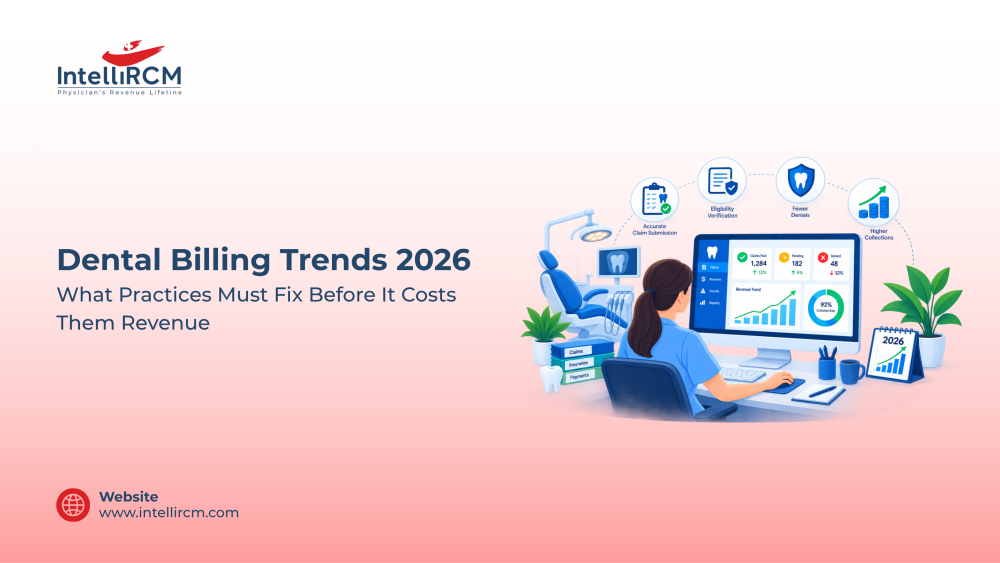
Claim denials are rising fast in 2026. See the billing changes your practice needs to protect revenue, pass audits, and outsource billing to IntelliRCM today.
Read More
Learn how the 120-day rule affects your CAQH attestation, what to verify, and how to keep your provider profile active and accurate. Read the full guide!
Read More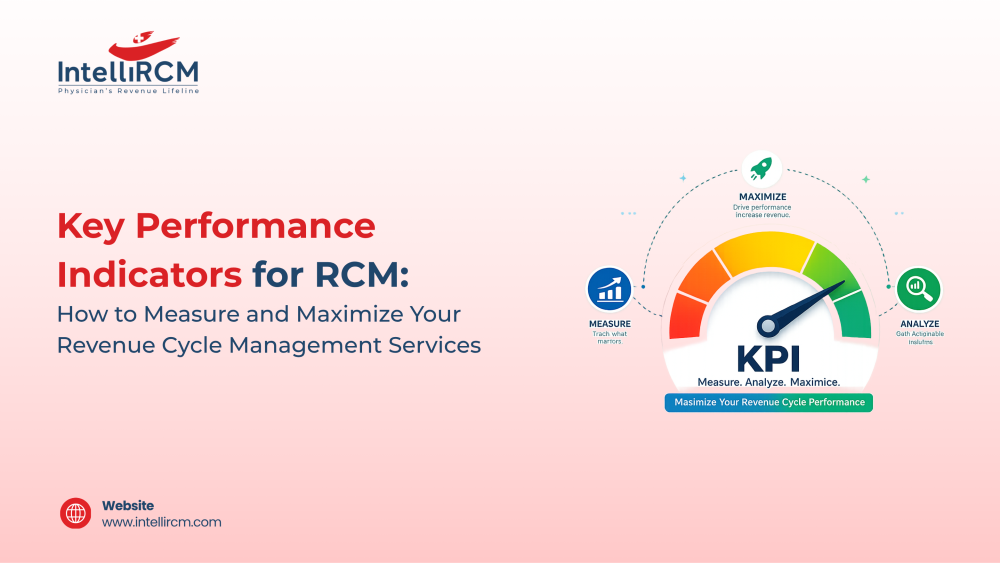
Track key RCM KPIs like denial rate, AR days, and collections to improve cash flow. Learn how expert RCM services boost revenue performance—get started today.
Read More