
 Medical Billing
 29-Apr-2026
Every U.S. healthcare provider knows the pain. A patient visit is completed, documentation is filed, a claim is submitted – and weeks later, it comes back denied. Staff scrambles to resubmit. Deadlines pass. Revenue quietly disappears.
This is not rare. Experian Health's 2025 State of Claims report shows 41% of providers now face denials on over 1 in 10 claims, up from 30% three years ago. Up to 65% of denied claims are never reworked, so much of that lost revenue is written off.
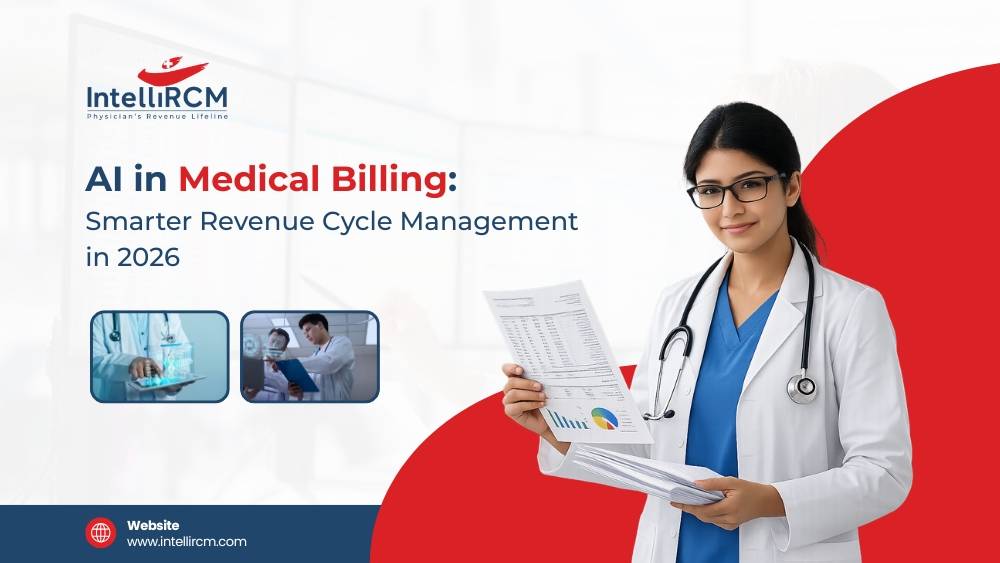
The good news: 2026 is a turning point. AI is no longer just a future concept in billing. It now reshapes medical revenue cycle management, reducing errors before claims leave, predicting denials, and cutting decades-old administrative costs.
For healthcare providers seeking reliable medical billing services in the USA, embrace AI in your revenue cycle now—take action to ensure your practice’s growth.
What Is AI's Real Role in Medical Revenue Cycle Management?
There is a lot of noise around AI in healthcare. It helps to be direct about what it actually does in a billing context.
AI in medical revenue cycle management analyzes large volumes of structured and unstructured data – patient records, payer rules, clinical notes, prior authorization histories – and applies that analysis to billing decisions in real time. It does not replace clinical judgment. It does not replace experienced billing professionals. What it does is eliminate the repetitive, high-volume, error-prone work that has always slowed down cash flow and strained billing teams.
The result is a shift from reactive billing to proactive financial management. Instead of chasing denied claims, AI-powered systems flag documentation gaps and coding mismatches before a claim is ever submitted. Instead of manually verifying eligibility for every patient, AI tools navigate payer portals autonomously and surface discrepancies in real time.
As one executive at R1 described it, revenue cycle work is fundamentally a translation problem – converting clinical language into accurate billing language across thousands of encounters, payer contracts, and regulatory requirements. AI is now doing that translation at scale, with consistency no manual team can match.
Modern medical billing solutions powered by AI automatically verify eligibility by checking patient coverage across dozens of payer portals before services are rendered. This single step significantly reduces downstream denials caused by front-end registration errors.
AI drives smarter claim scrubbing. Instead of generic edits, it checks each claim against payer-specific rules and the provider’s historical payment data, catching errors that standard clearinghouses miss. Predictive denial management analyzes denial patterns and flags risky claims, enabling teams to act before submission.
Patient billing has also been transformed. AI personalizes payment plan options based on individual financial situations, and chatbot-driven billing support helps patients understand their statements and resolve disputes without flooding the front desk with calls.
Natural language processing tools now read clinical documents and automatically suggest billing codes—reducing manual effort, increasing accuracy, and reducing audit risk. AI-driven coding interprets physician notes to capture procedure complexity, while certified coders review and validate codes to prevent undercoding or overcoding.
For specialty-heavy practices – including those relying on neurology medical billing – AI coding tools trained on specialty-specific documentation patterns are proving especially valuable. Neurology encounters are documentation-intensive, and automated code-suggestion tools have shown measurable improvements in coder productivity and case-mix accuracy.
Despite significant AI adoption, denial rates are still climbing. HFMA analysis shows initial denial rates reached nearly 12% in 2024, a year-over-year increase. So why is this still happening?
The core problem is fragmentation. Most providers still rely on multiple disconnected systems to collect the information needed for a single claim submission. When eligibility checks, prior authorization workflows, coding tools, and billing systems do not talk to each other, small inconsistencies cascade into waves of downstream denials.
A front desk error on Monday can result in a rejected claim six weeks later. Documentation gaps that go undetected at the point of care become payer disputes after the fact. And with up to 65% of denied claims never reworked, a large portion of that revenue is simply abandoned.
Providers must move beyond fragmented systems and embrace end-to-end integration. Take action to evaluate how unified AI platforms can streamline your revenue cycle and seize the significant competitive advantage that integration offers.
The financial case for AI in billing is clear. U.S. healthcare loses over $262 billion annually due to inefficiencies in the revenue cycle, including denials, undercoding, delayed follow-ups, and manual work. The National Bureau of Economic Research estimates broad healthcare AI adoption could save up to $360 billion each year by reducing waste and streamlining workflows.
On the operational side, AI cuts costs in several measurable ways. First, it dramatically reduces the labor required for high-volume, repetitive tasks – eligibility checks, payment posting, prior authorization follow-ups, and denial tracking. Staff can be redeployed to complex cases requiring genuine judgment rather than spending hours on routine data entry.
Second, AI reduces error costs. Every clean claim sent the first time avoids rework, resubmission, and delayed cash flow. Third, AI-powered revenue cycle solutions reduce overhead by automating exception-based workflows, escalating only complex cases to human teams.ams.
Auburn Community Hospital cut discharged-not-final-billed cases by 50% and boosted coder productivity over 40% with AI-assisted RCM tools. Results like these are increasingly common in practices moving past pilot programs to full integration.
For a medical billing company in the USA, AI is not just about operational efficiency. It is a competitive differentiator. Here is how AI-integrated billing workflows are delivering real results:
Faster reimbursements and cleaner claims – Companies that have successfully integrated AI are submitting cleaner first-pass claims, which means fewer rejections and faster payment cycles for their clients.
Multi-specialty visibility – AI-driven revenue cycle management services handle complex, multi-specialty environments without the disconnected patchwork of systems that limits reporting and slows decision-making.
Predictive denial management – Predictive analytics help billing companies forecast revenue performance, spot emerging payer trends, and address denial patterns across their entire client portfolio before they become systemic problems.
Stronger patient experience – Accurate cost estimates, proactive automation of the Patient Statement Service, and personalized billing communications reduce patient confusion, lower complaint volumes, and improve collection rates. As patient financial responsibility grows, it has become central to provider satisfaction.
Smarter credentialing workflows – Medical credentialing services benefit directly from AI. Credentialing is documentation-heavy and deadline-driven, and delays here mean delayed billing. AI tools track expiration dates, flag missing documents, and automate payer follow-ups, cutting turnaround times and eliminating preventable bottlenecks.
Several trends are defining the next phase of AI in medical billing. Practices and billing companies that understand these shifts now will be far better positioned heading into the next two to three years.
Agentic AI moves from assistant to actor – Unlike earlier automation that simply processed transactions, agentic AI systems set goals, execute multi-step workflows, and resolve exceptions autonomously. These systems do not just suggest what should be done – they do it, with human oversight reserved only for genuine edge cases.
Rapid expansion of AI-driven RCM – Over 75% of U.S. health systems plan to expand AI-driven RCM automation through 2026, with autonomous workflows across coding, billing, and denials ranking as top priorities. The outsourced RCM market is projected to nearly double over the next four years as providers seek specialized billing partners equipped with these capabilities.
Real-time predictive analytics replace historical reporting – Instead of reviewing last month's denial trends after the damage is done, billing teams will have live visibility into emerging payer behavior, allowing proactive adjustments before revenue is lost.
AI enters prior authorization – Prior authorization remains one of the most time-consuming and financially damaging parts of the billing cycle. Automated tools that interpret payer policies and submit auth requests without manual intervention are already reducing authorization denials and cutting days out of the revenue cycle.
Ambient clinical documentation integration – AI that listens during patient encounters and auto-populates medical records reduces documentation gaps at the source. This leads directly to cleaner coding, fewer denials, and a revenue cycle that starts stronger before a claim is ever submitted.
At IntelliRCM, we have spent years building a billing operation that combines deep human expertise with the best AI tools available for U.S. healthcare providers. We do not offer generic automation. We offer a specialized, end-to-end revenue cycle management platform designed around the specific payer environments, regulatory requirements, and specialty workflows that matter to your practice.
Our medical revenue cycle management services cover the full cycle – eligibility verification, prior authorization, medical coding, claim submission, denial management, and payment posting – with AI-powered workflows reducing errors at every stage. For specialty practices, including those requiring neurology medical billing, our coders and AI coding tools are trained on specialty-specific documentation patterns to ensure your claims capture the full value of every encounter.
We support independent practices, multi-specialty groups, and hospital systems across the United States with tailored medical billing services in the USA that scale with your needs. Our Patient Statement Service automates patient communications and payment plan management, reducing statement-related calls and improving collection rates. Our Medical Credentialing Services ensure providers are enrolled and credentialed on time, eliminating the revenue gaps that delayed enrollment creates.
If your current billing operation is leaving money on the table through denials, undercoding, or slow collections, IntelliRCM is the medical billing company in the USA built to fix that – with AI-powered tools, experienced billing specialists, and a performance-focused approach to your revenue.
AI has fundamentally changed what is possible in medical billing and revenue cycle management. Denial rates can be cut. Claims can be cleaner. Collections can be faster. The cost of running a billing department can come down. The data is clear, and the technology is proven.
But AI is a tool, not a strategy. The providers and billing companies winning in 2026 are not the ones who simply turned on an AI platform. They are the ones who combined AI-powered automation with experienced clinical coders, billing specialists who understand payer nuance, and a revenue cycle built around continuous improvement.
The practices still struggling are those that rely on fragmented systems, reactive denial management, and manual workflows that have not changed in a decade. The gap between them and their better-performing peers is widening – and it is widening fast.
Whether you are an independent practice looking for smarter medical billing solutions or a health system evaluating your next-generation revenue cycle management services partner, the time to act is now. The billing problem has not gone away. But the tools to solve it have never been better.

Maximize your healthcare financial health by adopting AI-driven RCM billing services. Learn why smart automation is now vital for modern revenue recovery today.
Read More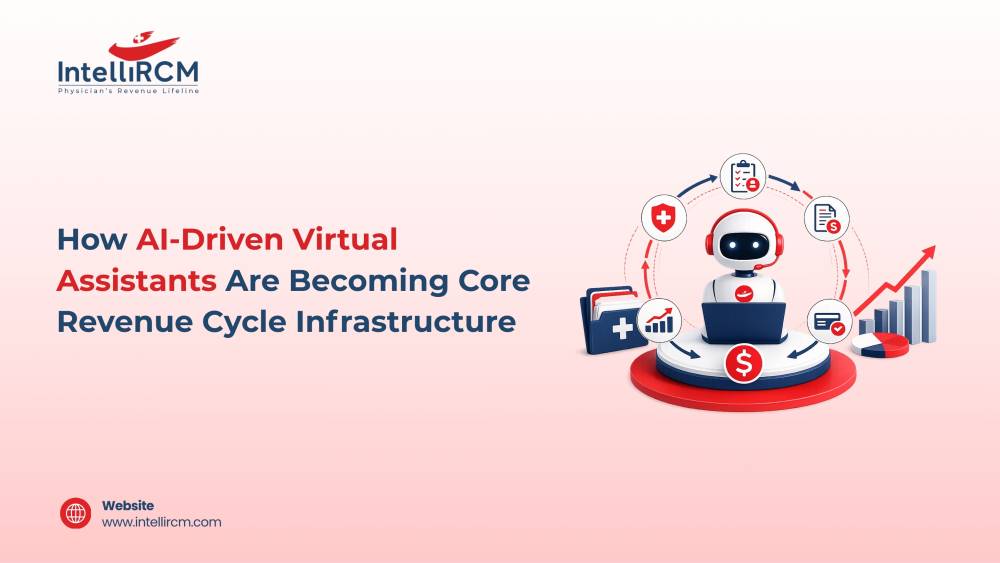
AI-driven virtual assistants are redefining healthcare revenue cycle management. Reduce claim denials, speed up reimbursements, and cut costs. Optimize your RCM today.
Read More
Learn the 6 core fundamentals of dental billing to reduce denials, improve cash flow, and streamline your practice. Start optimizing your billing process today.
Read More